1But Jesus went to the Mount of Olives. 2aEarly in the morning he again went to the temple courts. bAll the people ccame, and he sat down and taught them. 3Then the scribes and the Pharisees brought dhim a woman who had been caught in adultery. Making her stand before them all, 4they said to Jesus, etesting him, “Teacher, fthis woman was caught in the very act of committing adultery. 5In gthe law, Moses commanded us hthat such women should be stoned; what then do yoʋ isay?” 6(They said this to test him, so that they might jhave ksomething to accuse him of.) But Jesus stooped down and wrote lwith his finger on the mground, taking no notice. 7When they continued asking him, he nstood up and said to them, “Let him among you who is without sin obe the first to throw a stone at her.” 8And again he stooped down and wrote on the ground. 9When they heard this, they pwere convicted by their own consciences and qbegan to go away one by one, starting with the older rmen. So Jesus was left salone, with the woman tthere before him. 10Then Jesus ustood up and vsaw no one but the woman. So he wsaid to her, “Where are xyoʋr accusers? Has no one condemned yoʋ?” 11She said, “No one, Lord.” Jesus ysaid, “Neither do I zpass judgment on yoʋ; aago and sin no more.”
I Am the Light of the World
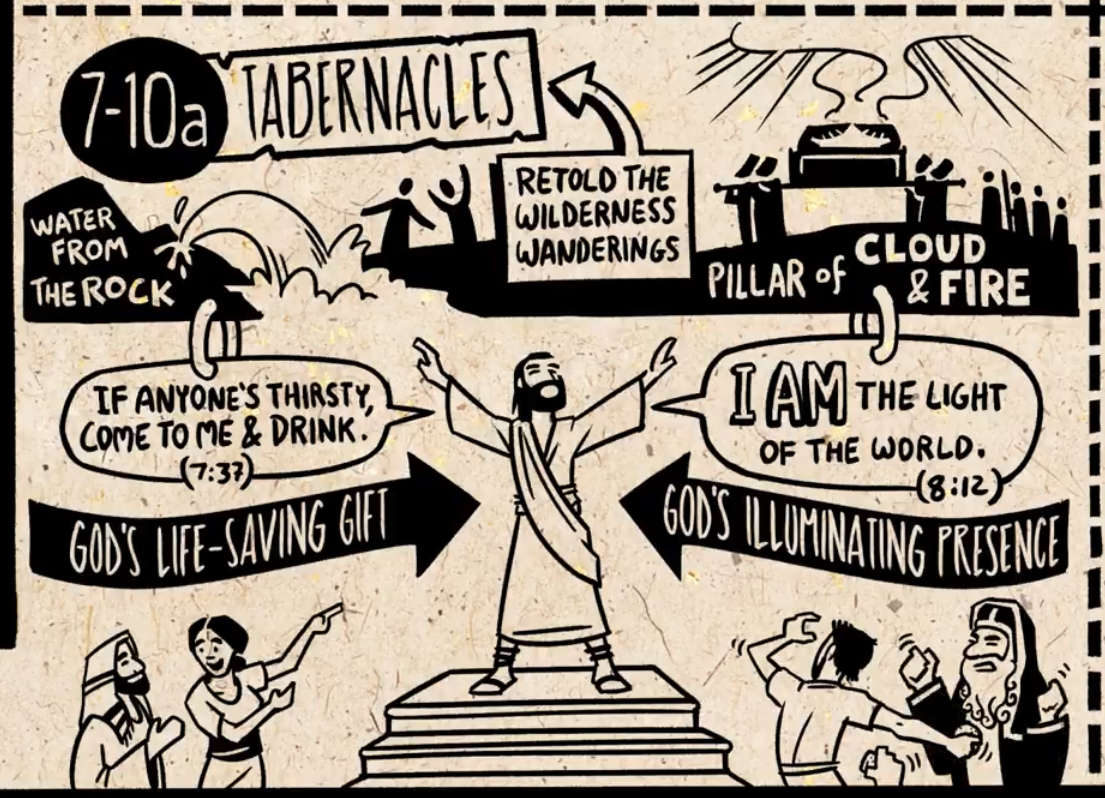
12Then Jesus spoke to them again, saying, “I am the light of the world. Whoever follows me will certainly not walk in darkness, but will have the light of life.” 13So the Pharisees said to him, “Yoʋ are testifying about yoʋrself, so yoʋr testimony is not valid.” 14Jesus answered them, “Even if I testify about myself, my testimony is valid, for I know where I came from and where I am abgoing, but you do not know where I come from or where I am going. 15You judge according to the flesh, but I judge no one. 16Yet even if I do judge, my judgment is valid; for I am not alone, but I stand with the Father who sent me. 17In your own law it is written that the testimony of two men is valid. 18I testify about myself, and the Father who sent me also testifies about me.” 19Then they said to him, “Where is yoʋr father?” Jesus answered, “You neither know me nor my Father. If you knew me, you would know my Father as well.” 20(Jesus spoke these words in the treasury as he taught in the temple courts. But no one arrested him, because his hour had not yet come.)
Where I Am Going, You Cannot Come
21Then Jesus said to them again, “I am going away, and you will seek me, but you will die in your sin. Where I am going, you cannot come.” 22So the Jews said, “Is he going to kill himself? Is that what he means by saying, ‘Where I am going, you cannot come’?” 23He said to them, “You are from below; I am from above. You are of this world; I am not of this world. 24Therefore I said to you that you will die in your sins, for if you do not believe that I am he, you will die in your sins.” 25They said to him, “Who are yoʋ?” Jesus said to them, “Exactly what I have been saying to you from the beginning. 26I have many things to say about you and to judge, but he who sent me is true, and I tell the world what I have heard from him.” 27(They did not know that he was speaking to them about the Father.) 28So Jesus said acto them, “When you lift up the Son of Man, then you will know that I am he and that I do nothing on my own authority, but I speak these things just as admy Father taught me. 29He who sent me is with me. aeThe Father has not left me alone, for I always do what pleases him.” 30As he was saying these things, many believed in him.
The Truth Will Set You Free
31Then Jesus said to the Jews who had believed in him, “If you abide in my word, you are truly my disciples. 32Then you will know the truth, and the truth will set you free.” 33They answered him, “We are descendants of Abraham, and we have never been enslaved to anyone. How then can yoʋ say, ‘You will be set free’?”
34Jesus answered them, “Truly, truly, I say to you, everyone who commits sin is a slave of sin. 35The slave does not abide in the house forever; the son abides forever. 36So if the son sets you free, you will be free indeed. 37I know that you are Abraham's descendants, but you are seeking to kill me because your hearts have no room for my word. 38I speak of what I have seen with afmy Father; so you also agare doing what you have ahseen with your father.”
39They answered him, “Our father is Abraham.” Jesus said to them, “If you aiwere children of Abraham, you would be doing the works of Abraham. 40But now you are seeking to kill me, a man who has spoken to you the truth I heard from God. Abraham did not do such a thing. 41You are doing the works of your father.” They said to him, “We were not born of fornication. We have one Father—God.” 42Jesus said to them, “If God were your Father, you would love me, for I have come here from God. I have not come of my own accord, but he sent me. 43Why do you not understand what I am saying? It is because you cannot bear to accept my word. 44You belong to your father the devil, and you want to carry out your father's desires. He was a murderer from the beginning and does not stand in the truth, because there is no truth in him. When he speaks lies, he speaks from his own character, because he is a liar and the father of lies. 45But because I speak the truth, you do not believe me. 46Which one of you can convict me of sin? If I am telling the truth, why do you not believe me? 47Whoever belongs to God hears the words of God. The reason you do not hear them is because you do not belong to God.”
Before Abraham Was, I Am
48The Jews answered him, “Do we not rightly say that yoʋ are a Samaritan and have a demon?” 49Jesus answered, “I do not have a demon, but I honor my Father, and you dishonor me. 50I do not seek my own glory; there is one who seeks it, and he is the judge. 51Truly, truly, I say to you, if anyone keeps my word, he will certainly never see death.” 52The Jews said to him, “Now we know that yoʋ have a demon. Abraham died, and so did the prophets, yet yoʋ say, ‘If anyone keeps my word, he will certainly never taste death.’ 53Are yoʋ greater than our father Abraham, who died? The prophets also died. Who do yoʋ make yoʋrself out to be?” 54Jesus answered, “If I glorify myself, my glory is nothing. It is my Father who glorifies me, of whom you ajsay, ‘He is our God.’ 55You do not know him, but I know him. If I were to say that I do not know him, I would be a liar like you. But I do know him, and I keep his word. 56Your father Abraham was glad that he would see my day. He saw it and rejoiced.” 57Then the Jews said to him, “Yoʋ are not yet fifty years old, and yoʋ have seen Abraham?” 58akSo Jesus said to them, “Truly, truly, I say to you, before Abraham was, I am.” 59So they picked up stones to throw at him, but Jesus hid himself and went out from the temple grounds. alAnd passing through the crowd, he walked away.